+91-629 188 5681
 dietician.priyaagarwal@gmail.com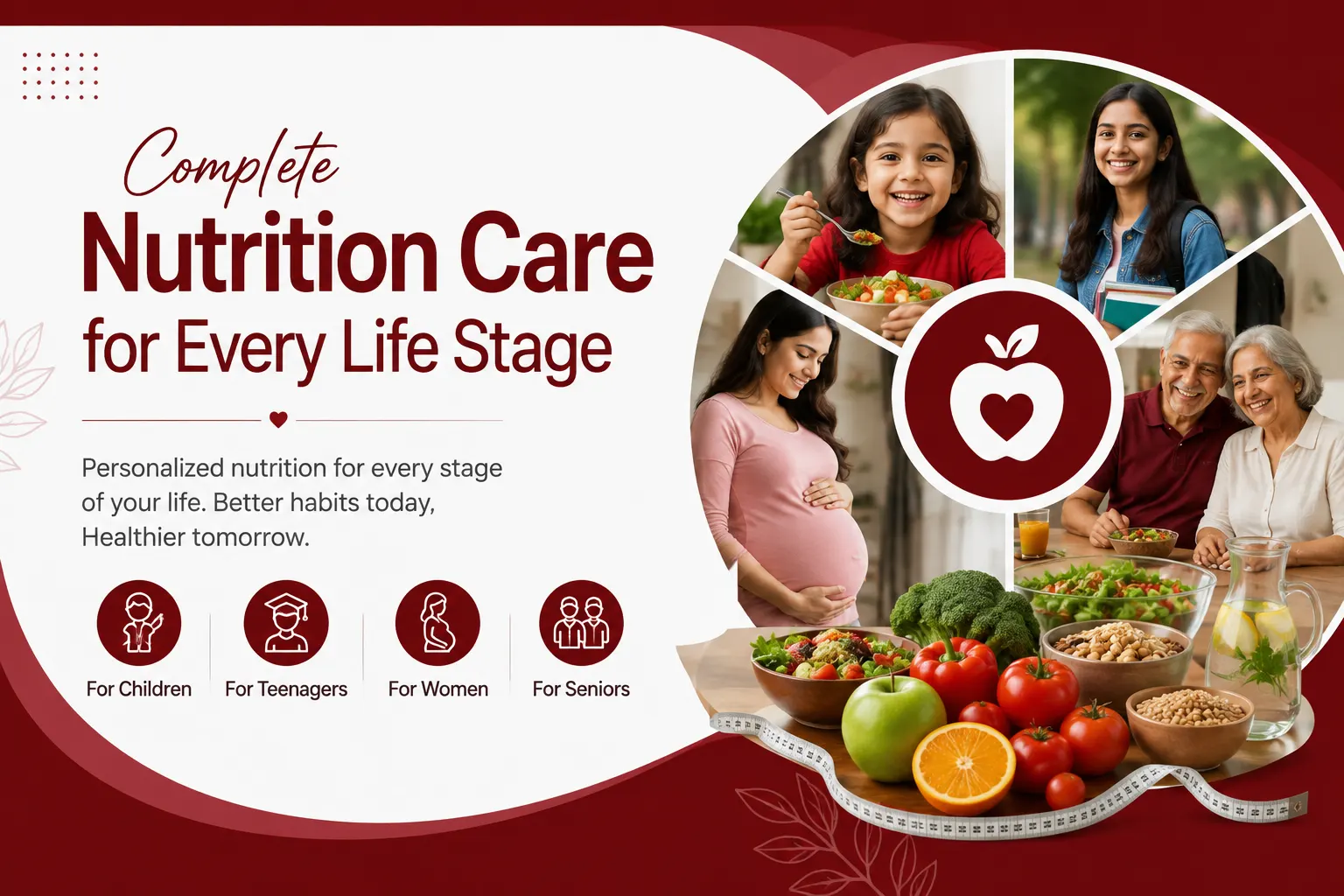
Healthy eating doesn’t have a fixed set of rules that stays the same always. What a child needs is very different from the nutrition required by a teenager, a pregnant mother, or an older individual. At every stage, food supports energy, growth, recovery, and long-term health.
Therefore, providing Nutrition Care for Every Life Stage with a practical, personalised approach is extremely essential.
Why Nutrition Needs Change Throughout One’s Life
Our bodies continuously change with time. Growth, hormonal changes, pregnancy, activity and movement levels, health conditions, and metabolism all affect how much energy and which nutrients we require. A balanced diet for different age groups should include appropriate portions of whole grains, proteins, fruits, vegetables, healthy fats, and fluids. Although the proportions and priorities must change with the person’s age, medical history, and lifestyle, that is the major reason why a proper diet is extremely necessary.
Nutrition During Infancy and Early Childhood
Why Early Age Nutrition Matters
The first few years of life are a major period of physical and brain development and overall child growth. Proper nutrition during infancy and early childhood helps support healthy growth, strong immunity, bone development, and skill grasping ability.
Breastfeeding is generally an important source of nourishment for infants, while complementary foods are introduced gradually at the appropriate time under professional guidance. As children grow, their meals should become nutrient-rich rather than overly dependent on packaged foods and drinks.
Key Nutrients for Children
Children need regular proper meals and healthy snacks because they have small stomachs in comparison to adults but high nutritional needs. So, in order to fulfil them, we need to focus upon:
- Protein from pulses, eggs, dairy products, fish, chicken, soy, and nuts, as appropriate for age.
- Calcium and vitamin D for bones and teeth.
- Iron for healthy blood and cognitive development.
- Healthy fats for brain development and energy.
- Fibre from fruits, vegetables, whole grains, and legumes for digestion.
Parents often worry about their child’s poor eating, low weight gain, recurring illness, or excessive intake of junk food. A nutritionist for children and adults can help create family-friendly meal ideas without turning mealtimes into a struggle, but rather making them a comfort for the entire family’s health.
Nutrition for School-Age Children and Teenagers
Meeting Nutritional Needs During Growing Years
School-age children and teenagers experience rapid physical growth, changes in eating habits, and increasing academic and sports demands. They need enough energy to stay active, concentrate at school, and maintain healthy development.
Skipping breakfast, replacing meals with fast food, and relying on sugary beverages can affect energy levels and concentration. The focus should be on regular, nourishing meals and a healthy relationship with the food they should be consuming.
Essential Nutrients for Children and Teenagers
A healthy diet for all age groups is especially important during the adolescent years, when bone mass and muscle development increase quickly. The highly important nutrients include:
- Iron, particularly important for teenage girls after menstruation begins.
- Calcium, vitamin D, and protein for strong bones and muscles.
- Complex carbohydrates from whole grains, fruits, and vegetables for steady energy.
- Healthy fats from seeds, nuts, fish, and oils in suitable amounts.
- Water, especially for all-day hydration and physical activity.
Simple habits such as carrying homemade food, including a fruit daily, and eating a balanced breakfast can make a meaningful difference with time.
Nutrition During Pregnancy and Lactation
Key Nutritional Needs During Pregnancy
Pregnancy is a time when food choices support both the mother’s health and the baby’s growth. However, “eating for two” does not mean doubling food in any sense. It means improving the nutritional quality of meals. A pregnancy diet has to include sufficient protein, iron, calcium, vitamin D, fibre, and fluids.
A personalised nutrition plan will certainly help manage a few common pregnancy concerns such as morning sickness, acidity, constipation, gestational diabetes, or unhealthy weight gain.
Healthy Eating During Breastfeeding
Nutrition for Lactating Mother focuses on supporting recovery after childbirth while helping maintain energy, hydration, and milk production. Regular balanced meals and adequate protein shall help in this process.
Breastfeeding mothers should avoid extreme weight-loss diets or unnecessary food restrictions. Instead, they need practical meals that work with a demanding new routine and support gradual, healthy recovery.
A dietitian for nutritional guidance can help in recommending proper food according to medical reports, work schedules, and appetite. This makes healthy eating easier to follow.
Nutrition for Older Adults and Seniors
Changing Nutritional Needs With Age
As people age, metabolism, appetite, digestion, mobility, and health conditions may change. Some older adults eat less because of reduced hunger, medication side effects, or difficulty preparing meals. Yet their need for nutrient-dense food remains very much into play.
Conditions such as diabetes, high cholesterol, high blood pressure, osteoporosis, digestive issues, and muscle loss may require dietary adjustments. The goal is to eat wisely and consistently.
Essential Nutrients for the Aged
Healthy eating at every age supports independence, strength, immunity, and quality of life. Senior citizens often benefit from focusing on:
- Protein
- Calcium and vitamin D
- Vitamin B12 and iron
- Fibre and fluids
- Healthy fats
Soft, easy-to-digest meals may be helpful for seniors with chewing or appetite difficulties.
Why Personalised Nutrition Care Matters
Nutrition Needs Are Different for Everyone
This matter is to be very specific about: two people of the same age may have completely different nutritional needs. Their activity level, sleep, stress, medical history, medications, food preferences, body composition, and all such associated factors matter.
That is why Nutrition Care for Every Life Stage should be extremely personalised as per individual requirements and understanding.
Take the First Step Towards Better Health
Your body is constantly evolving, and your food choices should evolve with it. With the right guidance, healthy eating can become a simple and sustainable part of everyday life for you and your family.