+91-629 188 5681
 dietician.priyaagarwal@gmail.com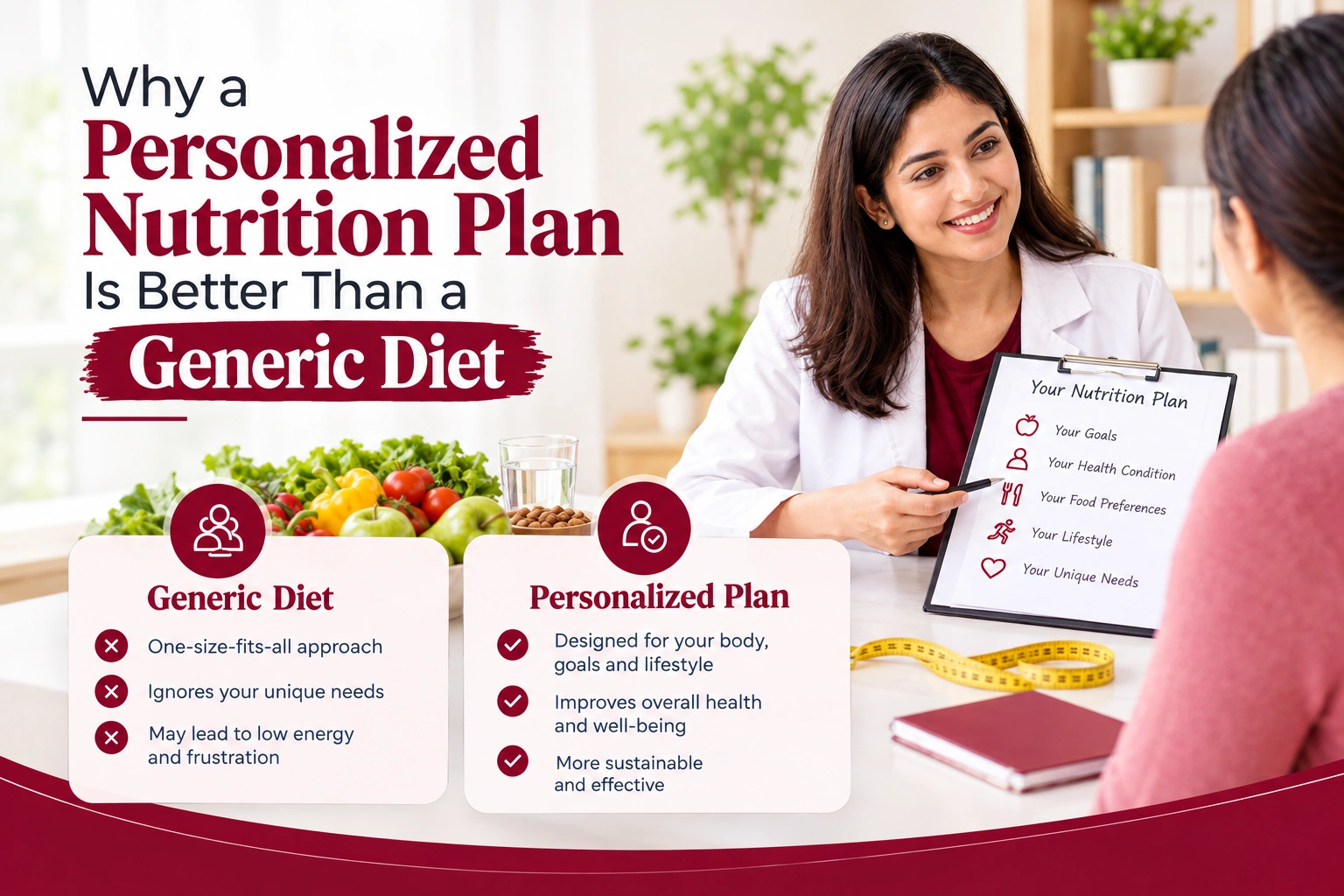
If you’ve ever tried a popular diet only to feel drained, hungry, or frustrated within a few days, you’re not alone here. The reason isn’t lack of willpower or consistency, it’s that generic plans ignore what makes your body, routine, and objectives unique. A personalized nutrition plan works with your body and lifestyle instead of fighting against them, making healthy eating more practical and effective.
What Is a One Size Fits All Diet?
A one size fits all diet is a standardized eating plan portrayed as best for “everyone.” Templates like keto, intermittent fasting, or calorie-counting apps that assign the same targets to all users regardless of age, activity, or health status are a sign of huge danger.
Why Generic Diet Plans Are Popular Throughout?
Simple messaging like “cut carbs,” “eat 1,200 calories,” or “no sugar” is easy to understand and share. Trending diets gain traction through influencers, before-and-after photos, and community challenges. Pre-made meal plans and apps promise quick results without the need for assessment or customization which is ultimately highly popular on social media platforms.
Barriers in Following the Same Diet as Everyone Else
Generic diets ignore physical variability. Genetical issues, physical metabolism, gut microbiome, and hormonal profiles differ a lot, so the same diet affects people differently. They also overlook health issues, a plan that helps one person may worsen blood sugar, thyroid function, or digestive issues in another person. Rigid rules and extreme restrictions lead to burnout; research shows over 80% of people regain weight within a year after these types of dieting.
Personalized Nutrition vs. Generic Diet Plans
-
Differences in Calorie and Nutritional Requirements
Calorie and nutritional requirements vary by age, sex, body composition, activity level, and metabolic health. An office worker, a nursing mother, and a construction worker all require different energy even if they share the same weight.
Personalized nutrition is a process of calculating needs based on a patient’s data and adjustment as per their body responds.
-
Differences Based on Health Conditions and Dietary Needs
Medical history matters. Food intolerances, digestive issues, or kidney related problems require specific modifications that generic plans don’t help in. A personalized diet plan considers these factors to avoid triggering symptoms or worsening the underlying conditions.
-
Differences in Lifestyle, Food Preferences, and Daily Routines
A plan that demands five home-cooked meals daily won’t work for someone with irregular shifts or frequent travel. Generic diet plans often prescribe rigid meal timings and slots, exotic ingredients, or strict bans that clash with real scenario. Customized nutrition plans adapt to one’s schedule, budget, taste preferences making them easier for following in a consistent manner.
Benefits of a Personalized Nutrition Plan
-
Supports Individual Health and Wellness Goals
Whatever your health related plans maybe, a personalized nutrition plan aligns food choices with your objectives and not a generic benchmark.
-
Makes Healthy Eating More Practical and Sustainable
Personalized nutrition turns healthy and proper eating into something doable every single day, not just during a “diet phase” or “mood”.
-
Helps Address Specific Nutritional Needs
From micronutrient gaps to blood sugar stability, a diet plan based on individual needs ensures you get the right nutrients at the right time for your body.
-
Can Support Healthy Weight Management
Because it accounts for your metabolism, activity, and satiety cues, a customized diet plan supports gradual improvement in health with planned objective attainment.
-
Encourages Better Eating Habits
Instead of temporary restrictions, personalized nutrition focuses on education, flexibility, and habit-building, helping you make informed choices even outside the plan. People following tailored advice show improved eating patterns and higher adherence over time.
Why Personalized Diet Plans Are More Sustainable
-
No Scene of Strict Food Restrictions
A customized nutrition plan allows for occasional treats, cultural foods, and social meals and reduces the “all-or-nothing” approach.
-
Adapting Nutrition to Your Changing Needs
Your body isn’t static. Stress, sleep, activity, age, and health status shift over time. With professional nutrition guidance, an evolved lifestyle is ensured.
-
Building Habits Rather Than Following Temporary Diets
The goal isn’t to “finish” a diet but to build lifelong skills. A dietitian consultation helps you understand portion sizes, label reading, meal balancing, and mindful eating for a sustainable lifestyle.
Conclusion
Generic diets fail not because people lack discipline, but because they ignore individuality. A personalized nutrition plan respects your biology, health history, lifestyle, and preferences thus with a science-backed approach, seeking professional nutrition guidance or a dietitian consultation can help you design a path that truly fits your life.